

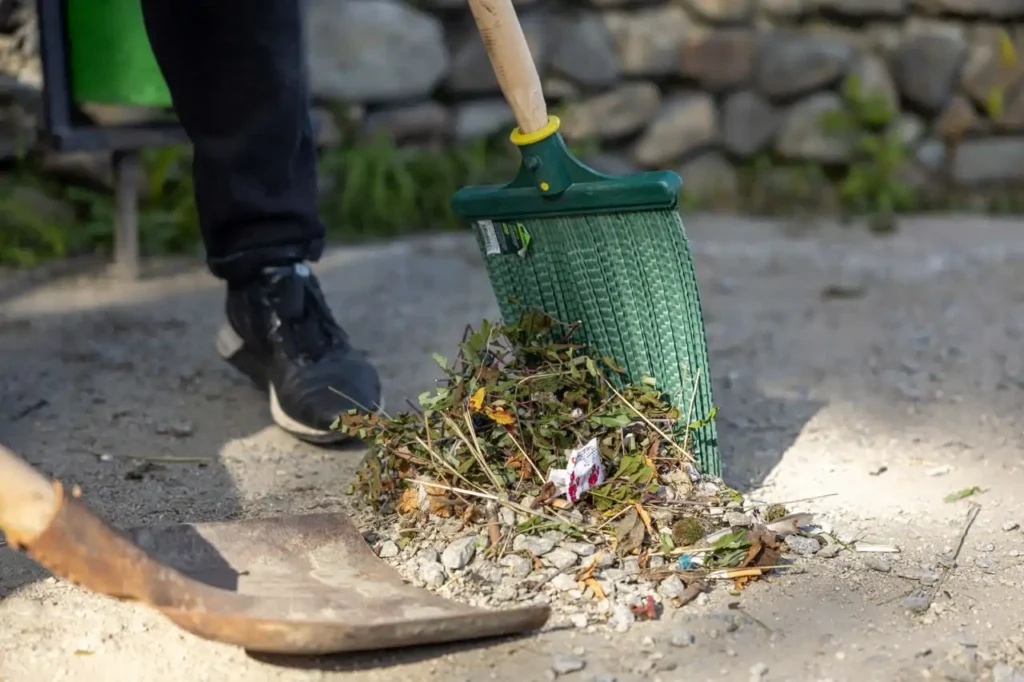
You didn’t plan to spend the whole weekend moving garden waste. But here you are, a pile of branches by the shed, bags of clippings that probably won’t fit in the council green bin, and a trip to the tip you’ve been putting off since last month. Sound familiar?
This is genuinely one of the more common predicaments Melbourne homeowners end up in, and it happens to landscapers too. Garden waste doesn’t shrink down neatly into bags. Branches take up space. Clippings multiply. And the standard options, bags to the kerb, multiple tip runs, stuffing the green bin and hoping for the best, eat time and rarely solve the problem in one hit.
A garden waste skip bin fixes this in a single booking. The bin arrives, sits at your property while you work through the job at your own pace, and gets collected when you’re done. Simple enough in theory. But there are things worth knowing before you book, mainly around what can and can’t go in a green waste bin, because the rules are stricter than most people expect.
Green Waste: What the Category Actually Includes
The term “green waste” gets used loosely, so it’s worth being specific. For skip bin purposes, green waste means organic garden material. Things that grew in your yard and haven’t been treated, chemically altered, or mixed with synthetic materials.
Grass clippings, leaves, and hedge trimmings are the obvious ones. But the category also covers branches generally anything up to around 150mm in diameter, prunings from shrubs and fruit trees, bark and mulch, weeds you’ve dug out from beds, spent flowers, and the kind of garden pull-outs that accumulate after a proper clean-up session. Tree stumps and roots can go in depending on size.
Soil is a slightly different story. A bit of dirt still clinging to pulled weeds or roots is no problem. But if you’re doing a landscaping project and excavating meaningful volumes of soil, that goes in a dedicated soil and dirt skip rather than a green waste bin. Soil is heavy and dense and needs to be handled separately from organic composting material.
What You Absolutely Cannot Put In
When you think of hire skip bin for green waste, here’s where things get specific, and where contaminating a load becomes a real risk.
Treated, painted, or stained timber is the big one that catches people out. You might have old treated pine sleepers that formed garden bed edging, or painted fence palings that came down during a yard renovation. They look organic. They’re technically wood. But they cannot go in a green waste skip bin because the treatment chemicals make them unsuitable for composting.
Same story for wire and metal, star pickets, wire fencing used as plant supports, metal garden stakes, chicken wire. It all needs to come out before loading. Plastic pots, garden hoses, drip irrigation lines, and anything made of synthetic material go in general waste, not green waste. Large rocks, bricks, and concrete pieces from garden beds need their own bin category if there’s a substantial volume of that.
And worth mentioning for older Melbourne properties specifically: some garden edging, shed sheeting, and corrugated material on properties built before the 1980s can contain asbestos. It’s not common, but it turns up. If you’re clearing an established garden on an older property and you find anything that looks suspect, don’t load it, give the team a call on 1300 300 565 before proceeding.
The reason all of this matters is that green waste from a skip bin goes to a composting or mulching facility. A contaminated load doesn’t just cause a headache as it can result in the entire collection being diverted to general landfill, which defeats the environmental point of separating it in the first place.
Winter Is Actually Important for a Melbourne Garden Clean-Up
Most people associate spring with garden work, and there’s obvious logic to that. But late autumn and winter in Melbourne have genuine advantages for green waste removal that are worth factoring in.
Deciduous trees drop their leaves and go dormant. That’s actually useful because you can see the proper structure of the tree and make better pruning cuts without fighting through full canopy. Heavy jobs like removing dead wood or shaping established trees are much easier when the tree isn’t in active growth. The cooler weather helps too, especially for the physical side of things. Hauling branches across a large block at 8 degrees with a thermos nearby is a considerably more pleasant experience than doing the same work in a February heatwave.
For landscapers running jobs across Melbourne’s outer north and west, places like Melton, Craigieburn, Werribee, and Tarneit where blocks tend to be generous and established gardens can take serious work to maintain, winter is one of the busiest green waste seasons. Multiple properties with deciduous trees and large established garden beds, all needing attention before the spring growth surge kicks in.
A green waste skip bin delivered to the site cuts out the back-and-forth to a green waste facility entirely. Load as you work, call for pickup when the job’s done.
Choosing the Right Bin Size
This is genuinely where people make the most mistakes with green waste, so it’s worth spending a moment on it.
Garden waste is bulky but usually not heavy. Branches, clippings, and leaves take up a lot of space relative to their weight. That means the instinct to book a small bin and save a bit of money often backfires as you fill it faster than expected and then have to deal with the consequences of either overfilling or needing a second delivery.
Small garden tidy: 2m³ or 3m³
For a light seasonal tidy on a standard Melbourne suburban block, mowing, some hedge trimming, a couple of garden beds then a 2m³ skip bin or 3m³ skip bin is likely enough. The 2m³ is about the footprint of a large fridge on its back. The 3m³ comes with rear walk-in access which makes loading with a wheelbarrow considerably easier.
Medium clean-up: 4m³ or 6m³
When the job scales up overgrown hedges that haven’t been touched in a season or two, mature fruit trees getting a proper prune, an established ornamental garden that needs a serious cut-back, a 4m³ or 6m³ skip bin makes more sense. The 4m³ is the sweet spot for most medium suburban blocks. The 6m³ is worth the upgrade if the vegetation is particularly dense, the block is on the larger side, or you know from experience that the job tends to produce more material than expected.
Large clearance: 8m³ to 10m³
Larger clearances like taking out sections of established garden, removing old hedges that have been there for decades, running a full landscaping project across a big property are where an 8m³, 9m³, or 10m³ bin comes in. Experienced landscapers often default to an 8m³ for a full-day job on a larger residential property simply because running out of space halfway through a job costs more in time than the extra bin capacity would have.
The honest advice: go one size bigger than your gut tells you. The price difference between adjacent sizes is usually modest. The cost of an overflowing bin or an unscheduled second delivery is not.
One Bin or Two?
Garden clean-ups often produce mixed waste. You might be clearing old terracotta pots alongside the organic material. Bits of wire and broken fence palings from garden beds. Bags of generalrubbishfrom the shed that ended up near the garden area.
If the bulk of the material is genuinely organic and there’s just a small amount of non-green-waste material mixed in, a general waste skip sometimes makes more practical sense. General waste bins accept a broader range of materials without the contamination concerns.
But if you have significant volumes of both a substantial garden clearing alongside a proper household clean-out or shed clearance, running a green waste bin and a general waste bin at the same time can be worth it. Particularly if keeping the organic material out of landfill matters to you. The team can talk through the most practical and cost-effective approach for your specific situation when you book.
What Actually Happens to Your Green Waste
It’s worth knowing this, because it’s not a trivial question.
Organic material that ends up in general landfill doesn’t decompose cleanly. Without adequate oxygen, it breaks down anaerobically, producing methane which is a greenhouse gas that’s considerably more potent than carbon dioxide in the short term. It also generates leachate that can affect soil and groundwater over time.
Green waste processed through proper composting and mulching facilities becomes something genuinely useful. Agricultural compost. Mulch for parks and gardens. Biomass in some cases. It’s one of the better waste streams in terms of recovery potential, which is why separating it properly matters. Rubbish Skip Hire operates under the Victorian EPA’s General Environmental Duty, meaning waste disposal is handled responsibly and material is directed to appropriate facilities rather than defaulting to general landfill for convenience.
Delivery is available across Melbourne’s north, west, east, and inner suburbs. Growth corridors including Craigieburn, Epping, Hoppers Crossing, Point Cook, Tarneit, Melton, and Werribee are all serviced, as are established inner and middle-ring suburbs like Brunswick, Reservoir, Doncaster, and Glen Waverley. The simplest way to check is to enter your postcode at the hire skip bin page. Pricing is postcode-based, shown upfront, and there are no hidden charges added after booking. page. Enter your postcode. Select green waste as the waste type. Choose your bin size. Pick your preferred delivery and pickup dates. Pay online and you’ll get a booking confirmation. Worth mentioning: if the bin needs to sit on a footpath, nature strip, or road rather than on your driveway or private property, you may need a council permit. Requirements vary across Melbourne’s local government areas. Not always required, but worth checking, the team can point you in the right direction if you’re unsure.
Heavy, bulky material goes in first such as thick branches, larger prunings, anything that takes up a lot of space. Then finer material fills in around and above: clippings, leaves, smaller cuttings. Same principle as packing a trailer properly. Don’t load above the top rim of the bin. It’s a transport safety issue and a driver won’t take a bin that’s been overloaded. If you’re approaching the top and still have material left over, call and discuss a bin swap or second collection rather than compressing and overpacking. Before calling for pickup, do a quick check for any non-organic material that might have ended up in the bin during loading a piece of old irrigation tubing, a plastic pot, or some wire. Small amounts aren’t usually a problem. Significant contamination can lead to additional charges or the load being redirected from composting.
Garden waste is one of those things that looks manageable until you start moving it, and then it multiplies. Multiple tip runs and stuffed council bins are the standard workaround, but neither actually solves the problem efficiently. A green waste skip bin hire from Rubbish Skip Hire takes the logistics off your hands. Book online, load at your own pace, and have the bin collected when the job is done. The skip bin sizes guide covers everything from a small backyard tidy to a major landscaping clearance, and same-day delivery is available across most Melbourne suburbs.
Book at rubbishskiphire.com.au/hire-skip-bin/ or call 1300 300 565 if you’d rather talk through the options first.
Green & Garden Waste Skip Bin Hire FAQs
Organic garden material that can be composted or mulched — grass clippings, branches under 150mm diameter, hedge trimmings, shrub prunings, leaves, bark, weeds, spent flowers, and general garden pull-outs. Treated or painted timber, plastics, metals, chemicals, large rocks, and concrete cannot go in a green waste bin
Small amounts of soil clinging to roots and pulled weeds is generally fine. Significant volumes of excavated or pure soil need a separate soil and dirt skip because soil is handled differently to organic composting material.
Pricing is postcode-based and shown upfront at the hire skip bin page — no hidden charges added after booking. Costs vary depending on bin size and your location.
Light seasonal tidies on standard suburban blocks usually suit a 2m³ or 3m³. Medium clean-ups and overgrown hedges call for a 4m³ or 6m³. Large clearances and landscaping projects typically need an 8m³ to 10m³. The skip bin sizes page has full dimensions and use-case guidance.
Hire periods are flexible and arranged around your schedule. Contact the team to extend if you need more time.
If the bin sits on private property such as a driveway, generally no permit is required. Footpath, nature strip, or road placement depends on the local council — requirements vary across Melbourne. Call now and the team can advise what applies to your address.
Material is directed to composting or mulching facilities wherever possible, producing compost and mulch rather than going to landfill. Rubbish Skip Hire operates under the Victorian EPA’s General Environmental Duty.
No. Green waste bins are for organic garden material only. Contamination prevents composting and can result in the entire load being diverted to general landfill. If you have both types, speak to the team about the best approach when booking.
Same-day and next-day delivery is available across most Melbourne suburbs. Book online or call 1800 060 177 to confirm availability for your area.
Yes. Service areas include outer growth corridors such as Craigieburn, Melton, Tarneit, Werribee, Hoppers Crossing, Epping, and Point Cook, as well as established inner and middle-ring suburbs across the north, east, and west. Enter your postcode at the hire skip bin page to confirm availability




