


If you are planning a major cleanup, renovation, demolition or landscaping, there is a good chance that you have already looked up “skip bin hire near me” into Google. But what about hook bins? And suddenly you’re asking yourself if you ever hired the wrong thing all these years. Most people only realise there’s a difference when a truck pulls up and the bin looks completely different to what they expected. To save you the hassle and to make sure you choose the right one for your job, here’s a simple breakdown of hook bins vs skip bins, how they work, and when you should pick one over the other.
What Exactly Is a Skip Bin?
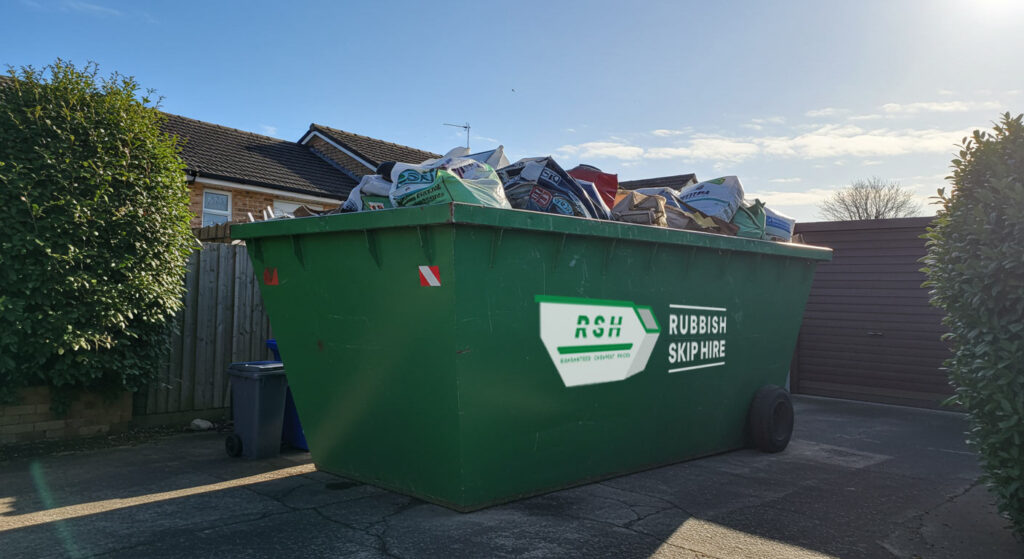
Let’s start with the classic. Skip bins are the most common kind of waste bins. They’re the ones with a slanting front wall, short height and two tiny ears on the sides on which the truck raises them. They’re perfect for:
- House clean-outs.
- Small renovation jobs.
- Green waste.
- General household rubbish.
- Light construction waste.
Skip bins are small, easy to pack, and can be used in tight suburban driveways. They typically range from 2m³ to 12m³, with the small ones capable of being housed almost anywhere. Most households employ them because they’re simple, affordable and readily available. But here’s where skip bins start to find their limit: heavy waste loads and heavy volumes.
What Is a Hook Bin?
A ‘hook bin’ (also called a hook-lift bin or commercial skip) is built for bigger, heavier and more commercial sized jobs. These are the big, rectangular bins you’ll see on construction sites and demolition jobs. Instead of being lifted up with arms on the truck, the truck literally hooks onto the bin and pulls it up onto the tray.
Hook bins are designed for:
- Construction and demolition waste.
- Industrial clean-ups.
- Large-scale rubbish removal.
- Soil, concrete, tiles, bricks.
- Entire property clear-outs.
- Bulk loads.
And unlike skip bins, they’re taller, longer and carry more weight. The standard size of hook bins depends on the company, most begin at somewhere between 10m³ and up to 30m³.
Hook Bins vs Skip Bins: Important Differences Between Them
To break it down a little, here’s the real difference:
- Size & Capacity
Skip bins: 2m³–12m³
Hook bins: 10m³–30m³+
And the sheer volume is dominated by this one, hook bins. - Loading Style
Skip bins come with a large top and a low front wall, making it easy for items to be easily dumped into.
Hook bins typically have full swing doors that allow you to walk waste in with a wheelbarrow. Now that is a big advantage with heavy construction rubble or materials. - Weight Handling
Skip bins are fine for general household waste, but are not built specifically for ultra-heavy loads.
Hook bins, however, are engineered to accommodate tonnes of concrete, tiles, soil, steel, timber — you name it.
If you have a heavy job, a hook bin is almost always the safer solution. - Truck Access
Skip bin trucks have a smaller size and can manoeuvre into tight suburban areas.
Hook-lift trucks require much more space to reverse and slide the bin down, so they’re better suited to:
Wide driveways.
Commercial sites.
Open yards.
Roadside placements.
If access is poor, a skip bin can be more convenient.
- Choose a skip bin if you are:
- Cleaning out a garage.
- Renovating a bathroom or kitchen, just a small piece of floor space.
- Clearing green waste.
- Removing general rubbish.
- Living on a small block or on a tight street.
- Choose a hook bin if you’re:
- Knocking down walls.
- Removing bricks, concrete, soil, tiles or rubble.
- Doing a complete house clean-out.
- A construction or commercial project.
- Dealing with heavy equipment or large loads.

How to Know Which One You Need
The easiest way to decide on that is to look at what’s going in the bin, how much space you have, and how big the job actually is. Ask yourself these questions:
- How much waste will there be for me to deal with? If you’re guessing, you’d be underestimating. A hook bin allows you to go bigger without having to fill it too quickly.
- Is the waste heavy? Tiles, bricks, concrete, soil and demolition debris get heavy quickly. Skip bins get very full and can easily go over the weight limit. Hook bins are built for it.
- Do I have to use a wheelbarrow? If yes, you’ll like a hook bin’s walk-in doors. You save time, your back and your driveway.
- Do I have the space for a bigger truck? If access is scarce, a skip bin may be the safer choice.
- Is the job residential or commercial? Residential jobs → usually skip bins, commercial or demolition → usually hook bins.
Cost Differences: Which Is Cheaper?
There is no hard and fast rule, as pricing varies based on:
- Size.
- Location.
- Waste type.
- Duration.
- Weight limits.
But here’s the general trend:
Small jobs: Skip bins are cheaper.
Large or heavy tasks: Hook bins offer better value.
And if you attempt to load heavy waste into a skip bin, you might have to pay more for overweight loads, and that can add up fast.
Still Not Sure Yet? Here’s The Simplest Way To Decide. If you are leaning towards either side but are unsure, here’s the rule of thumb for making the decision: Pick a hook bin if it’s heavy. If it is general household waste, opt for a skip bin.
Most people need a skip bin unless they are doing some serious renovation or demolition work. But for larger clean-ups, a hook bin will save you money, time and hassle.
Skip bins and hook bins both exist for a reason. They’re made for different types of waste and for different sized jobs. The secret is just knowing what you’re actually facing.
Small, simple, light = skip bin.
Big, bulky, heavy = hook bin.
Everything goes much more smoothly if you match the right bin to the right job. You’ll be spared overflowing bins, overweight charges and last-minute headaches. Plus, clean-ups happen faster and are safer for you.
Common questions about Hook Bins vs Skip Bins
What is the major difference between a hook bin and a skip bin?
It is size and method of pick up that bring the greatest difference. Skip bins are the smaller, inclined-front ones raised with arms. Hook bins are the long rectangular bins that can slide onto the back of the truck by hook arm. Hook bins can hold significantly more waste and tend to take heavier materials, while skip bins are preferred for smaller, daily clean-ups.
Which one is better for heavy waste, such as bricks or concrete?
If you’re working with a solid material tiles, concrete, bricks, soil, a hook bin is almost always the best choice. They’re designed to deal with the weight that would easily overload a skip bin. Skip bins are OK for general waste, but large loads can add extra weight fees.
So, are hook bins more expensive than skip bins?
Not necessarily. For light, simple rubbish, smaller skip bins are generally cheaper. But if you have a heavy or big load, a hook bin is more beneficial because you’re not paying extra for overweight limits. Long term, that right bin tends to come with cheaper returns.
Do hook bins occupy more space?
Yes, hook bins are longer and make space for the truck to reverse and slide the bin off again. If your driveway or street is narrow, a skip bin may be better suited. Hook bins are suitable for wide driveways, open yards, construction sites, and commercial areas.
Can you use a wheelbarrow with a hook bin?
Definitely. The majority of hook bins feature large swing-open doors that allow you to walk your waste directly in. That can be a lifesaver if you’re clearing rubble, soil, bricks or anything heavy. Skip bins typically do not have walk-in doors, so you’ll lift everything over the top.
Are skip bins suitable for renovations?
For small renovations like bathrooms or kitchens, a skip bin is perfect. But if you’re knocking down walls, pulling up tiles or removing anything bulky, a hook bin is a better match. It all varies depending on how large your project is.
How do I know which bin size to select?
A general clean-out or small reno usually suits a skip bin between 4m³ and 8m³. But if you have a significant project or a ton of waste, you’d want something more like a 10m³ to 30m³ hook bin. If in doubt, a bigger size also saves you from needing another bin.
Can both bins go on the street?
You will need to check with your council.
Which bin is better for a full house clean-out?
For big clean-outs, the hook bin is usually the simplest. You take full advantage of the additional space, the walk-in door moves the load along, and you don’t have to worry about running out of space. If it’s just a small amount of rubbish, a skip bin can work.
What if I pick the wrong type of bin?
In most cases, it just ends in frustration. Either the bin fills too fast, the rubbish is too heavy, or you end up needing a second bin. Picking the correct one from the beginning saves unnecessary costs and keeps the entire job going smoothly. Get in touch with us and we will help you decide.
